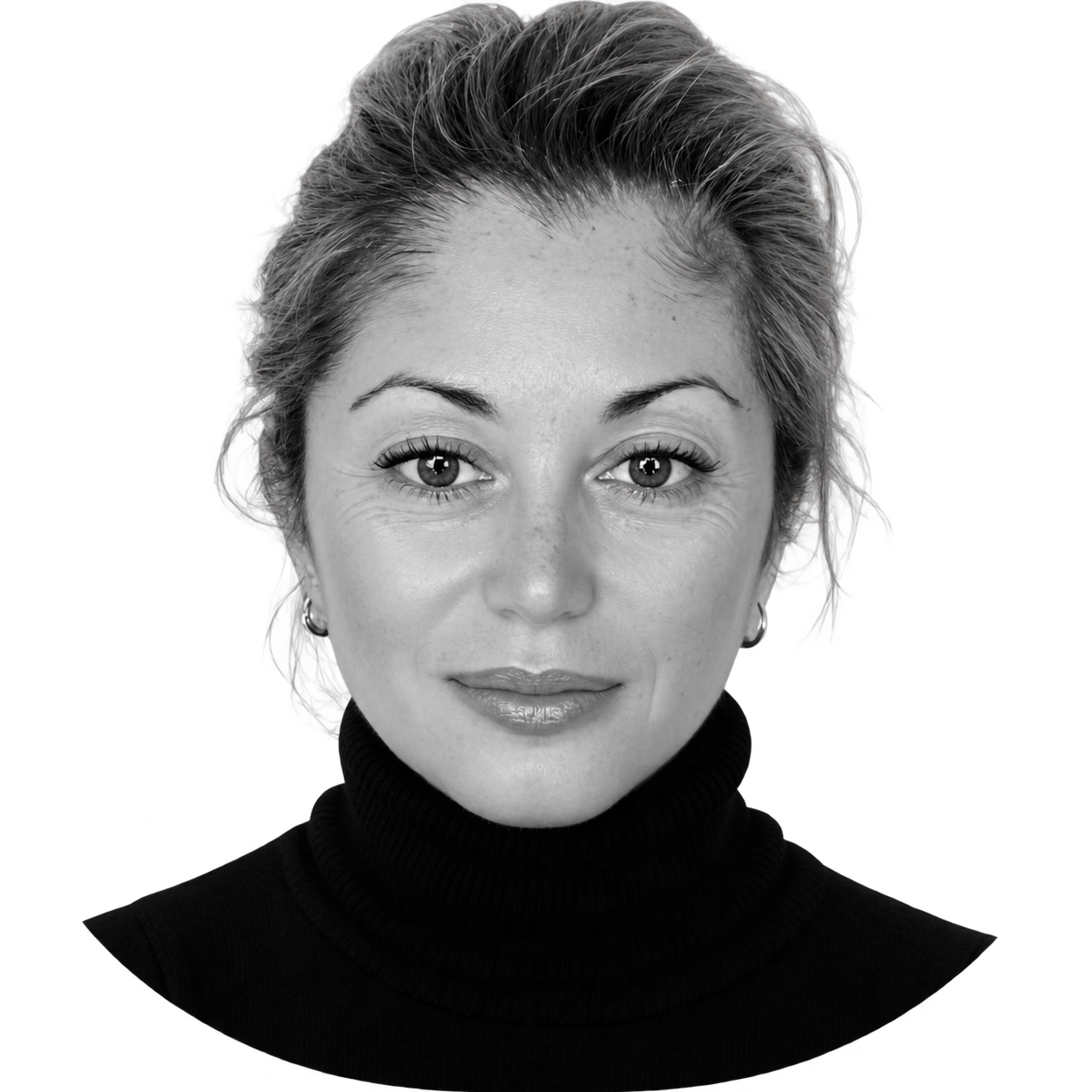
invisible woman
NATO / MARCOM
My dispute with NATO’s Allied Maritime Command began with a personal relationship. It developed into a question about institutional responsibility: what happens when descriptions of a civilian circulate within a military community, security restrictions follow, and the person affected cannot obtain the information necessary to understand the connection?
My former partner, Commander Laureano Pastor Veiga, was a Spanish naval officer serving at MARCOM, Northwood Headquarters. I am a British and Polish citizen, a practising solicitor and, at different stages, his partner and legal representative.
Those were identifiable roles. The descriptions that subsequently attached to me were very different.
The three labels below have different evidential foundations.
“Russian Spy” appears in accounts of circulating rumours.
“Unwelcome Partner” describes the treatment recorded in our contemporaneous complaint.
“Excluded Legal Representative” describes an express instruction communicated in September 2025. They are not three formal findings made by NATO.
“Russian Spy”: a rumour with an unresolved institutional history
The transcript of Laureano’s conversation with the colleague dated 8 July 2025, records a revealing exchange.
Laureano explained that I held British and Polish passports and worked as a lawyer. The conversation nevertheless returned to my birthplace, my supposedly Russian appearance ("she looks Russian like hell") and a video of me shooting at a civilian range ("she has military training!"). The NATO officer interpreted my shooting ability as evidence of a possible military background and reported that people at Northwood thought I was a spy.
That transcript records what the participants said. It does not establish the identities of the people allegedly circulating the rumour, whether they had any evidence, or whether their comments entered an official security process.
It does show how ordinary facts about a person can be assembled into a suspicious identity: birthplace, appearance, hobbies and competence become reasons to question whether she is who she says she is.
There is also a separate documentary reference. Review Wye records that the female RAF Police officer who attended the Northwood incident was aware of rumours circulating within MARCOM, including that I was believed to be a “Russian Spy” (§78). The review expressly corrected the earlier investigation’s suggestion that she had not known of that rumour (§80). It nevertheless concluded that the evidence did not establish discriminatory treatment by the RAF Police officers. Sure, "I do not care if you are British or not, you have no rights here" does not bear any discriminatory meaning. Pure professionalism and impartiality.
The existence of the rumour was recorded. Its source and its relationship to institutional decisions remained unresolved.
Meanwhile, the UK Ministry of Defence pleaded that no UK decision-maker had ever determined that I posed a threat to national security. It described the restrictions imposed o my possible attendance to Northwood (with no pending application for such) as precautionary measures pending investigations into Laureano by Spanish and NATO officials (Summary Grounds of Resistance, 13 November 2025, §14). That is the Ministry’s pleaded position, rather than a judicial finding. Basically, if your husband is suspected of stealing from ASDA (no offence proven), you can be barred from attending the shop whilst the Police is investigating if it is it true or not. With no notification or right to appeal. Great principle!
My question is therefore specific: what information concerning me existed within the NATO/MARCOM system, who supplied it, and what was communicated to other authorities?
I have not established (yet) that the rumour caused the restrictions. Obtaining the records needed to test that possibility is part of the dispute, and the Ministry of Defence is resisting.
“Unwelcome Partner”: the relationship became an institutional concern
Our joint complaint to MARCOM, sent on 5 July 2025, described a pattern of social exclusion, derogatory language and pressure surrounding our relationship.
Laureano reported that he had been encouraged to end the relationship and warned of professional or security-clearance consequences. We described the December 2024 social events, changes to seating arrangements and our exclusion from the farewell dinner on 3 July 2025. My section recorded degrading language, including “puta espía rusa”, and explained the effect of hostility associated with my perceived origin.
There is also a transcript of the meeting with Admiral José Enrique Delgado, MARCOM Chief of Staff, on 22 June 2025 provides a more direct example of the difficulty.
The discussion concerned Laureano’s relationship with me, our plans for a child, his access restriction and his professional position. When I joined and asked to understand the situation, Delgado declined to discuss it with me and called me "Esta señorita". Laureano explained that it affected both of us. The conversation ended without the explanation we sought.
That exchange does not, by itself, establish unlawful discrimination. It illustrates the position I was challenging: I was sufficiently involved to be discussed as part of the problem, but was treated as a third party when I sought an explanation.
It remained as an established and repeated pattern. On 11 July 2025, MARCOM’s Legal Adviser, Commander Stanislas Frenzel, responded to our complaint by separating responsibility into two categories. Access to Northwood was a matter for the UK host nation; matters concerning Laureano’s military service should be pursued with Spain.
Those distinctions may explain who controls a site or a national posting. They did not substantively determine our allegations about conduct within the MARCOM environment.
On 12 July, I therefore asked Admiral Mike Utley for a substantive response. A further cover letter dated 15 July sought command-level consideration.
My objection was that identifying another authority responsible for an eventual restriction did not answer what MARCOM personnel had said, done, received or communicated beforehand.
“Excluded Legal Representative”: another lawyer was acceptable; I was not
The clearest evidence of my individual treatment appears in Julio Hernández García’s email of 8 September 2025.
Writing from his MARCOM address, Hernández explained that Laureano’s attendance had to be coordinated with Northwood. He expressly confirmed that Laureano could be accompanied by a legal representative.
He then specified that the representative could not be me:
“En ningún caso puede ser la Sra. Janina White.”
He repeated that I would not be admitted under any circumstances and that, if Laureano came with me, the meeting would have to be postponed.
This was an instruction concerning an identifiable individual. It was not simply a general statement that visitors required authorisation.
I do not contend that being a solicitor, holding a Power of Attorney or being British automatically entitled me to enter a military establishment. The issue is why an arrangement permitting a legal representative specifically excluded me, and what decision or information supported that distinction. I was deprived from the same right of seeking such permission. In all circumstances.
The email documents the instruction communicated through MARCOM. It does not, by itself, establish who originated it. Hernández referred to coordination with the base, making the underlying communications important.
Who required my exclusion, on what grounds, and how was that requirement conveyed and implemented?
How I tried to obtain answers
I pursued complaints, requests for clarification and NATO’s own data-protection procedure.
My request of 12 February 2026 sought limited metadata concerning information about me in the Northwood/MARCOM context. On 13 May, the ACO Data Protection Office refused disclosure because the requested information apparently concerned investigations and deliberative proceedings. They did not specify which ones.
I also submitted a separate administrative request on 13 March. That concerned my own visitor processing, associated status, complaints and administrative records.
On 11 June, ACO confirmed that MARCOM had processed categories of my personal data for access purposes, including my name, date of birth, nationality and sponsorship details. It referred questions about dependent status to Spain.
That response identified categories of information. It did not provide the individual records or chronology I was seeking.
On 15 June, I narrowed the request further. I asked whether specified MARCOM records existed and sought their administrative metadata, including records of my December visit, complaint handling and transmissions to UK authorities between 18 and 23 June 2025.
ACO promised a response by 15 July. On 3 August, it declared the request closed, largely by referring back to earlier replies. It also warned that further requests of the same kind, raising no new facts, would qualify as vexatious. Lovely, if you ask to answer your question more than twice, you are labelled as vexatious.
My concern was that a request for identifiable records had been treated as repetition of questions already answered by general descriptions or restrictions on disclosure.
What NATO decided on 9 October 2026
The ACO Data Protection Board rejected my complaint dated 15 June and endorsed the earlier responses. It described its decision as final, ending the complaints procedure and administrative process at ACO.
The Board also stated that:
Those statements provide an institutional position. They did not answer my questions and did not address my complaint. They still leave important questions about the records searched, the distinctions between record categories, and what happened to the substantive complaints.
The absence of a separate complaint log does not establish that my complaints were never received: the Board expressly recognised the emails. It leaves the question of how those communications were registered, allocated and considered.
Likewise, a stated retention rule does not establish when a particular record was destroyed or whether related correspondence and transmission records remain.
NATO’s published data-protection framework recognises access and rectification rights, subject to restrictions. It expressly includes metadata and system logs within its scope, while excluding intelligence and counter-intelligence processing. Restrictions under paragraph 8 require an applicable policy basis or duly justified and documented reasons. Paragraph 52 also provides for a three-level dispute-resolution procedure. These distinctions matter when assessing the scope of ACO’s refusal and the route it says is now closed.
The renewed complaints
On 20 September 2026, I submitted two further complaints following press reports that colleagues within the NATO environment had called me “Red Sparrow”.
One requested examination of the reported sexualised and minimising characterisation, the earlier complaints and safeguards against derogatory descriptions entering official information channels.
The other requested investigation of possible access to Laureano’s private communications, a concern reported in 2025. Those communications contained highly intimate material concerning me.
I have not established that anyone accessed or circulated that material, or that it contributed to the reported nickname. I asked NATO to investigate whether a connection existed or could be excluded.
NATO’s own Women, Peace and Security policy commits it to combatting harassment and discrimination and maintaining high standards of professional conduct. I invoke those commitments as standards against which the institutional response should be assessed. Maybe it will be applied to Invisible Woman, but I am not sure if I fall under a category of a Woman being protected by the official NATO policy.
Why I am challenging these labels
My UK proceedings concern UK defendants. They do not automatically make NATO responsible for British decisions.
NATO/MARCOM nevertheless holds part of the relevant history. On 29 September 2026, I requested an authoritative institutional account and voluntary factual evidence concerning its knowledge, communications and handling of the events.
The central questions remain: what was said about me, what became official information, who received it, and what safeguards allowed me to challenge it?
I am not asking NATO to accept my reconstruction without testing it. I am asking it to provide a documented account capable of being tested.
A description of a woman should not acquire institutional consequences while its origins remain beyond her reach.
Documentary references: Joint complaint to MARCOM, 5 July 2025; MARCOM LEGAD response, 11 July 2025; further representations, 12 and 15 July 2025; transcripts of the Delgado meeting, 22 June 2025, and call dated 8 July 2025; Hernández correspondence, 8–9 September 2025; Review Wye, §§78–80; MoD Summary Grounds of Resistance, §14; ACO correspondence, 13 May, 11 June, 30 June, 3 August and 9 October 2026; renewed complaints, 20 September 2026; institutional evidence request, 29 September 2026. Complaints and pleadings state the parties’ positions.
My former partner, Commander Laureano Pastor Veiga, was a Spanish naval officer serving at MARCOM, Northwood Headquarters. I am a British and Polish citizen, a practising solicitor and, at different stages, his partner and legal representative.
Those were identifiable roles. The descriptions that subsequently attached to me were very different.
The three labels below have different evidential foundations.
“Russian Spy” appears in accounts of circulating rumours.
“Unwelcome Partner” describes the treatment recorded in our contemporaneous complaint.
“Excluded Legal Representative” describes an express instruction communicated in September 2025. They are not three formal findings made by NATO.
“Russian Spy”: a rumour with an unresolved institutional history
The transcript of Laureano’s conversation with the colleague dated 8 July 2025, records a revealing exchange.
Laureano explained that I held British and Polish passports and worked as a lawyer. The conversation nevertheless returned to my birthplace, my supposedly Russian appearance ("she looks Russian like hell") and a video of me shooting at a civilian range ("she has military training!"). The NATO officer interpreted my shooting ability as evidence of a possible military background and reported that people at Northwood thought I was a spy.
That transcript records what the participants said. It does not establish the identities of the people allegedly circulating the rumour, whether they had any evidence, or whether their comments entered an official security process.
It does show how ordinary facts about a person can be assembled into a suspicious identity: birthplace, appearance, hobbies and competence become reasons to question whether she is who she says she is.
There is also a separate documentary reference. Review Wye records that the female RAF Police officer who attended the Northwood incident was aware of rumours circulating within MARCOM, including that I was believed to be a “Russian Spy” (§78). The review expressly corrected the earlier investigation’s suggestion that she had not known of that rumour (§80). It nevertheless concluded that the evidence did not establish discriminatory treatment by the RAF Police officers. Sure, "I do not care if you are British or not, you have no rights here" does not bear any discriminatory meaning. Pure professionalism and impartiality.
The existence of the rumour was recorded. Its source and its relationship to institutional decisions remained unresolved.
Meanwhile, the UK Ministry of Defence pleaded that no UK decision-maker had ever determined that I posed a threat to national security. It described the restrictions imposed o my possible attendance to Northwood (with no pending application for such) as precautionary measures pending investigations into Laureano by Spanish and NATO officials (Summary Grounds of Resistance, 13 November 2025, §14). That is the Ministry’s pleaded position, rather than a judicial finding. Basically, if your husband is suspected of stealing from ASDA (no offence proven), you can be barred from attending the shop whilst the Police is investigating if it is it true or not. With no notification or right to appeal. Great principle!
My question is therefore specific: what information concerning me existed within the NATO/MARCOM system, who supplied it, and what was communicated to other authorities?
I have not established (yet) that the rumour caused the restrictions. Obtaining the records needed to test that possibility is part of the dispute, and the Ministry of Defence is resisting.
“Unwelcome Partner”: the relationship became an institutional concern
Our joint complaint to MARCOM, sent on 5 July 2025, described a pattern of social exclusion, derogatory language and pressure surrounding our relationship.
Laureano reported that he had been encouraged to end the relationship and warned of professional or security-clearance consequences. We described the December 2024 social events, changes to seating arrangements and our exclusion from the farewell dinner on 3 July 2025. My section recorded degrading language, including “puta espía rusa”, and explained the effect of hostility associated with my perceived origin.
There is also a transcript of the meeting with Admiral José Enrique Delgado, MARCOM Chief of Staff, on 22 June 2025 provides a more direct example of the difficulty.
The discussion concerned Laureano’s relationship with me, our plans for a child, his access restriction and his professional position. When I joined and asked to understand the situation, Delgado declined to discuss it with me and called me "Esta señorita". Laureano explained that it affected both of us. The conversation ended without the explanation we sought.
That exchange does not, by itself, establish unlawful discrimination. It illustrates the position I was challenging: I was sufficiently involved to be discussed as part of the problem, but was treated as a third party when I sought an explanation.
It remained as an established and repeated pattern. On 11 July 2025, MARCOM’s Legal Adviser, Commander Stanislas Frenzel, responded to our complaint by separating responsibility into two categories. Access to Northwood was a matter for the UK host nation; matters concerning Laureano’s military service should be pursued with Spain.
Those distinctions may explain who controls a site or a national posting. They did not substantively determine our allegations about conduct within the MARCOM environment.
On 12 July, I therefore asked Admiral Mike Utley for a substantive response. A further cover letter dated 15 July sought command-level consideration.
My objection was that identifying another authority responsible for an eventual restriction did not answer what MARCOM personnel had said, done, received or communicated beforehand.
“Excluded Legal Representative”: another lawyer was acceptable; I was not
The clearest evidence of my individual treatment appears in Julio Hernández García’s email of 8 September 2025.
Writing from his MARCOM address, Hernández explained that Laureano’s attendance had to be coordinated with Northwood. He expressly confirmed that Laureano could be accompanied by a legal representative.
He then specified that the representative could not be me:
“En ningún caso puede ser la Sra. Janina White.”
He repeated that I would not be admitted under any circumstances and that, if Laureano came with me, the meeting would have to be postponed.
This was an instruction concerning an identifiable individual. It was not simply a general statement that visitors required authorisation.
I do not contend that being a solicitor, holding a Power of Attorney or being British automatically entitled me to enter a military establishment. The issue is why an arrangement permitting a legal representative specifically excluded me, and what decision or information supported that distinction. I was deprived from the same right of seeking such permission. In all circumstances.
The email documents the instruction communicated through MARCOM. It does not, by itself, establish who originated it. Hernández referred to coordination with the base, making the underlying communications important.
Who required my exclusion, on what grounds, and how was that requirement conveyed and implemented?
How I tried to obtain answers
I pursued complaints, requests for clarification and NATO’s own data-protection procedure.
My request of 12 February 2026 sought limited metadata concerning information about me in the Northwood/MARCOM context. On 13 May, the ACO Data Protection Office refused disclosure because the requested information apparently concerned investigations and deliberative proceedings. They did not specify which ones.
I also submitted a separate administrative request on 13 March. That concerned my own visitor processing, associated status, complaints and administrative records.
On 11 June, ACO confirmed that MARCOM had processed categories of my personal data for access purposes, including my name, date of birth, nationality and sponsorship details. It referred questions about dependent status to Spain.
That response identified categories of information. It did not provide the individual records or chronology I was seeking.
On 15 June, I narrowed the request further. I asked whether specified MARCOM records existed and sought their administrative metadata, including records of my December visit, complaint handling and transmissions to UK authorities between 18 and 23 June 2025.
ACO promised a response by 15 July. On 3 August, it declared the request closed, largely by referring back to earlier replies. It also warned that further requests of the same kind, raising no new facts, would qualify as vexatious. Lovely, if you ask to answer your question more than twice, you are labelled as vexatious.
My concern was that a request for identifiable records had been treated as repetition of questions already answered by general descriptions or restrictions on disclosure.
What NATO decided on 9 October 2026
The ACO Data Protection Board rejected my complaint dated 15 June and endorsed the earlier responses. It described its decision as final, ending the complaints procedure and administrative process at ACO.
The Board also stated that:
- Northwood’s Commanding Officer was responsible for site access;
- MARCOM retained access badges and application forms of transitory value for the current year only;
- the records examined contained no data concerning a person outside the status of dependent spouse or legal partner;
- restrictions concerning investigations and deliberative proceedings applied; and
- its searches had found no separate complaint or grievance administrative logs beyond my data-protection complaint and emails sent to MARCOM, SHAPE and ACO.
Those statements provide an institutional position. They did not answer my questions and did not address my complaint. They still leave important questions about the records searched, the distinctions between record categories, and what happened to the substantive complaints.
The absence of a separate complaint log does not establish that my complaints were never received: the Board expressly recognised the emails. It leaves the question of how those communications were registered, allocated and considered.
Likewise, a stated retention rule does not establish when a particular record was destroyed or whether related correspondence and transmission records remain.
NATO’s published data-protection framework recognises access and rectification rights, subject to restrictions. It expressly includes metadata and system logs within its scope, while excluding intelligence and counter-intelligence processing. Restrictions under paragraph 8 require an applicable policy basis or duly justified and documented reasons. Paragraph 52 also provides for a three-level dispute-resolution procedure. These distinctions matter when assessing the scope of ACO’s refusal and the route it says is now closed.
The renewed complaints
On 20 September 2026, I submitted two further complaints following press reports that colleagues within the NATO environment had called me “Red Sparrow”.
One requested examination of the reported sexualised and minimising characterisation, the earlier complaints and safeguards against derogatory descriptions entering official information channels.
The other requested investigation of possible access to Laureano’s private communications, a concern reported in 2025. Those communications contained highly intimate material concerning me.
I have not established that anyone accessed or circulated that material, or that it contributed to the reported nickname. I asked NATO to investigate whether a connection existed or could be excluded.
NATO’s own Women, Peace and Security policy commits it to combatting harassment and discrimination and maintaining high standards of professional conduct. I invoke those commitments as standards against which the institutional response should be assessed. Maybe it will be applied to Invisible Woman, but I am not sure if I fall under a category of a Woman being protected by the official NATO policy.
Why I am challenging these labels
My UK proceedings concern UK defendants. They do not automatically make NATO responsible for British decisions.
NATO/MARCOM nevertheless holds part of the relevant history. On 29 September 2026, I requested an authoritative institutional account and voluntary factual evidence concerning its knowledge, communications and handling of the events.
The central questions remain: what was said about me, what became official information, who received it, and what safeguards allowed me to challenge it?
I am not asking NATO to accept my reconstruction without testing it. I am asking it to provide a documented account capable of being tested.
A description of a woman should not acquire institutional consequences while its origins remain beyond her reach.
Documentary references: Joint complaint to MARCOM, 5 July 2025; MARCOM LEGAD response, 11 July 2025; further representations, 12 and 15 July 2025; transcripts of the Delgado meeting, 22 June 2025, and call dated 8 July 2025; Hernández correspondence, 8–9 September 2025; Review Wye, §§78–80; MoD Summary Grounds of Resistance, §14; ACO correspondence, 13 May, 11 June, 30 June, 3 August and 9 October 2026; renewed complaints, 20 September 2026; institutional evidence request, 29 September 2026. Complaints and pleadings state the parties’ positions.
