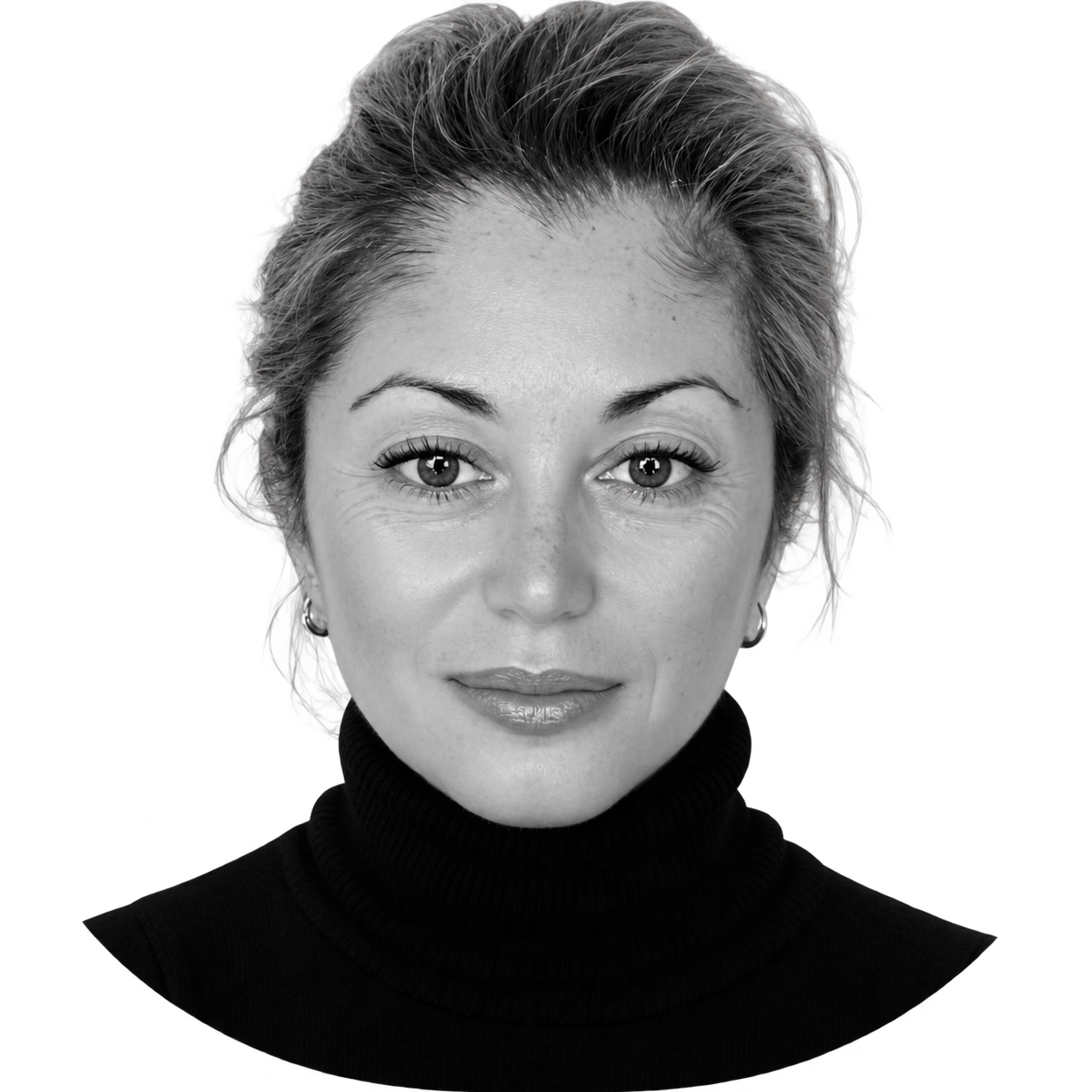
invisible woman
"THE RUSSIAN SPY" WHO FOUND TWO NATO SECURITY BREACHES
PART ONE — COFFEE WITH A SPY
St Petersburg, Russia. Monday, 31 August 2026. Approximately 2:30 pm.
He was young, handsome and rather charming.
We were having coffee in St Petersburg. He had introduced himself as someone working for Russian intelligence. At the end he paid for my coffee. I do not know, if I can treat it as a payment from a hostile intelligence. I prefer to regard it as a gesture of appreciation of my company.
I have met many interesting men in my life. Lawyers, politicians, businessmen, military officers. One particularly memorable Spanish naval commander serving within NATO.
But a man claiming to work for Russian intelligence was something of a novelty. I believed him, he was handsome, clever and showed good manner. Russian James Bond.
Considering that I had spent more than a year being associated with rumours of Russian espionage, perhaps I should have regarded the encounter as an overdue professional introduction.
Instead, we ordered coffee.
Then he showed me something on his phone, which made him believe that he indeed was from Russian Intelligence services. As he showed me something nobody should know, apart from me and maybe another person on this planet.
A video.
Approximately twenty seconds long.
Two people having sex in almost complete darkness.
And he asked me a very simple question.
“Is that you?”
I looked at the screen.
The recording was disturbingly familiar.
On 27 June 2025, while staying in Sintra, Portugal, Laureano made that intimate recording. What this man showed me resembled part of that recording.
I thought I recognised my voice.
But the image was dark, the clip was brief, and I could not reliably identify the people.
So I gave him the only answer I could honestly give.
“I don't know.”
I still don't.
I cannot verify the man's claimed intelligence affiliation. I cannot establish whether the recording was ours, where it originated or how he obtained it. I do not know how a complete stranger could have an intimate recording and, out of all people of the planet, ask me to identify the actors.
But I can establish something else.
For the record, I did not provide Russian intelligence with intimate recordings of my relationship with Laureano. In fact, I have never provided any Russian authorities with any information, whether classified, intimate or secret in any other way.
I appreciate that this may disappoint those who imagined my romantic life operating as an exceptionally unconventional intelligence-sharing programme.
But I must insist.
Our private recordings were not NATO briefing materials. But, it happened, there were located in the NATO unclass laptop. Laureano's work laptop, which was taken away from him in June 2025.
My personal life was not an intelligence-sharing arrangement. At least I hope so.
And I have never knowingly participated in a Forward to the FSB initiative.
But, following the Red Sparrow revelations, I am not sure, if it were the case for other people involved.
The sarcasm is intentional.
The underlying question is serious.
If that video really was ours, how did it reach a man claiming to work for Russian intelligence?
And why did the question of my private information lead me back to the institutions that had spent so much time examining whether I presented a security concern?
Because the more I investigated, the more I encountered two peculiar anomalies.
One concerned the movement of security decisions back in June - July 2025.
The other concerned the movement of private information, which has disappeared from that NATO unclass laptop.
Both involved the military environment surrounding my relationship with Commander Laureano Pastor Veiga. I call that military environment "the Golden Triangle" consisted of Spanish delegation at Northwood, MARCOM and Northwood HQ. That Golden Triangle, at least in information flow and communication dimensions was controlled by two men - Almirante José Enrique Delgado Roig and Group Captain Neil Towers RAF.
And both anomalies, I am going to explore below, made me wonder whether the people responsible for identifying security threats, primarily the two actors I have mentioned, had adequately examined the security of their own procedures.
PART TWO — THE TWO ANOMALIES
ANOMALY ONE — WHEN "SECURITY INFORMATION" TRAVELS AT LIGHTNING SPEED, EXCEPT WHEN IT MATTERS
Let us return to June 2025.
At the time, Laureano was a Spanish naval officer serving within NATO's Allied Maritime Command, MARCOM, at Northwood.
I was his civilian partner.
I was also a British solicitor, born in the Soviet Union. Almost 50 years ago.
That last fact would become unexpectedly important.
16 June — An administrative request
On 16 June 2025, Laureano formally informed his military superiors that we had decided to resume our relationship.
He sought guidance concerning the administrative processing of his changed personal circumstances. Formally.
In other words, he was not concealing our relationship.
He was reporting it. Directly to his command, Admiral Delgado. In accordance with the rules.
One might reasonably have expected an administrative response.
Perhaps a form.
Possibly several forms.
This was the military, after all.
Instead, the situation escalated.
18 June — Spanish military intelligence
On 18 June, representatives of CIFAS, the Spanish military intelligence organisation, flew from Spain and questioned Laureano about his relationship with me. Later the documents would show that the alleged NATO and Spanish investigation against Laureano started in February 2025. On 18 June 2025 the NATO people were onsite and they did not bother. But the Spaniards took a plane and arrived in a hurry to ask Laureano one question.
One issue concerned my visit to Northwood on 12 December 2024.
The allegation was that I had been brought onto the establishment without proper authorisation.
There was an inconvenient detail. I retained a photo of my pass of being an escorted visitor.
The British Ministry of Defence subsequently acknowledged, in its Summary Grounds of Resistance dated 13 November 2025, that I had been issued a one-day escorted visitor pass for that visit.
A visitor pass is not a security clearance.
But it is still an official visitor authorisation.
And that distinction matters when institutions begin describing somebody's presence as a security problem to initiate a chain of administrative decisions against an officer, who served the institution for 35 years.
19–20 June — Northwood acts
According to the MoD's account, Group Captain Neil Towers, Commanding Officer of Northwood HQ, became aware of security concerns relating to Laureano on 19 June. The source of these concerns apparently were NATO and Spanish authorities.
He directed that Laureano's access pass be withdrawn pending further investigation.
Another thing happened that day. Laureano has presented a photo of my pass to the CIFAS officers and they confirmed that they have investigated the allegation and indeed found the discrepancy - apparently in the MoD security systems, the record of Laureano's details was not correct. Spaniard have difficult names, they have many forenames and surnames, which Britons simply twist and misspell. Laureano was shown the record, by one of the CIFAS officers that his sponsorship of my entry to Northwood 7 months earlier was recorded under his other surname.
I think what happened next, Towers was shown the record, that MoD system dos not contain the information that Laureano was my sponsor at that day. I think it was done on purpose and the purpose was to make Towers to proceed with emergency security measures, as the poor guy was convinced that a Spanish officer knowingly breached the security rules and somehow sneaked his woman into the MARCOM event at Northwood premises. The official MoD documents state that Towers found out about my place of birth being the USSR on that day.
Basically for 7 months after the event, the Golden Triangle slept peacefully. But on the 19th June if got activated. The British Captain has received a sensational intelligence from allied counterintelligence - our officer has brought a Russian girlfriend into your establishment. I think at the point Towers saw "Russian" word, his brain stopped working, so he even did not checked anything else. This is how military works - as soon as they see the danger, they stop thinking and act.
So he acted.
On 20 June, Laureano was escorted off the establishment and surrendered his pass.
The access permissions of his wife and children were also suspended. Allegedly he was told that his pass was suspended, as well as his wife's and children's'. They had the passes worth of being suspended. I did not. Instead, Mr Towers has imposed sanctions specifically on me in relation to my possible application for entry or attempt to enter the base, which effectively were stricter than again the person under alleged investigation. Whilst Laureano as well as his wife and kids retained the option of attending the base, a note was placed against my name, that in no circumstances I could be escorted and a police should be called if I approach the base. Laureano was not informed about that sanction against me. I was only the reason, why his pass was suspended, I did not deserve to be informed about that my name has entered a lists of possible terrorists.
"I do not care, if you are British or not, you have no rights here" - I would hear 2 months later from RAF officers.
"Your security and professional concerns are fanciful" - I would hear 9 months later from MoD lawyers.
"This is your race, which was taken into consideration, when making that decision" - I finally heard in November 2026 in MoD pleadings to my Equality Act claim.
But at that time, I was told nothing. As well as Laureano.
21–22 June — Beer with the admiral
On 21 June, according to Laureano's account, Rear Admiral José Enrique Delgado Roig unexpectedly invited him for a drink. If I say that Laureano was surprised, it would be an understatement.
The following day, they met in Bushey, near Northwood.
I subsequently joined them.
I remember a conversation that became entangled with our relationship and personal plans. Mr Delgado was very interested in my possible pregnancy. He was even more interested in convincing Laureano to return to his wife. He was not interesting in discussing security concerns, neither Spanish or British. Apparently, if Laureano decided to return to his wife, his allegedly security breach would become an insignificant concern.
After I have joined both gentlemen (correction, one gentleman and one admiral), the atmosphere becoming confrontational. Delgado was not delighted to see me at all, and this is another understatement.
During that meeting Laureano raised a practical question, as both of us supposed to go to Portugal. I was processed by Brussels to go to Oeiras as Laureano's partner. This is important - I was processed by the NATO circles, which were outside of the Golden triangle.
So Laureano asked Delgado - what should he do about his forthcoming NATO duties in Portugal?
He was expected to attend NEST 25-2 at Oeiras. A highly secret NATO conference, where strategic operations planning against Russians were discussed.
He understood that he remained under military orders to participate. At the same time, he was told, by those CIFAS officers, that he was suspected of a possible security breach due to our relationships.
The conversation with Delgado about it did not produce a clear operational answer. Delgado simply did not know, if Laureano could go or not. He came to speak to Laureano about his personal relationships with me, a suspected Russian spy, who has broken illegally into the British military base, but he could not answer a question, if his officer could go to a highly secret NATO event with the same Russian spy as a companion.
23 June — The British communication
On 23 June, Towers communicated security concerns about Laureano to the Spanish command chain. I have that letter.
The concerns were linked to his relationship with me.
Crucially, the underlying information was described as not fully verified and requiring further investigation.
The question is - what was the purpose of this letter? Towers has already made his decision to suspend Laureano's pass and his wife's and kids' passes on 19 June. He has already made a decision about placing me on the suspected terrorists' list. Why he needed to issue that letter on the 23rd of June?
In any event, this unverified concern was sent out to Spaniards. They acted immediately, but, as occurred later, applying very strange priorities.
Yes, they converted the Tower's unverified concern, into official warning from British allies. This is state din Spanish official documents.
This was the purpose of that letter, to activate Spanish administrative chain.
But neither British unverified concerns or Spanish crystalised allegations about security breach ever reached the wider NATO.
24–26 June — The NATO activity
On 24 June 2025 Laureano travelled to Oeiras, Portugal, for NATO activity associated with NEST 25-2. He has his orders.
I accompanied him. I have my clearance from NATO Brussels admin (as well as Putin's orders, of course).
He attended to his professional duties, which meant access to cosmic secret NATO facilities and devices, apparently. I was enjoying access to Portuguese solar facilities and devices at the neighbouring beach.
But the next day, on 26 June, I entered the NATO facility using my Polish passport as identification. Laureano wanted to have lunch with me. And a joint photo outside STRIKEFORNATO building. Both missions were successful.
According to my recollection, I spent much of the day there.
So.
I did not climb over a fence.
I did not disguise myself as an admiral.
I did not steal an access badge.
I did not even had sex in the shower with the base commander, to be sneaked illegally into the premises.
I presented myself openly and was admitted through the arrangements operating at the facility.
At the time, I had no reason to believe that my presence was unauthorised.
25 June — The documents
Later, I obtained two Spanish security-clearance suspension documents, which were served on Laureano in September 2025, 3 months after the event.
Both bear the date 25 June 2025. The same day, when Laureano started his work at the conference and one day before I entered that base.
One concerns Laureano's Spanish national security clearance.
The other concerns the associated NATO, EU and ESA security-clearance framework.
And suddenly the chronology becomes interesting.
If the suspension decisions were taken on 25 June, what exactly was Laureano's clearance status while performing NATO duties on 25 and 26 June?
When did the decisions become effective?
Who was notified?
What permissions remained available?
And under what arrangements was I admitted?
And at this point my photographic memory clicked - I remembered an email, Laureano copied me in, to the NATO HQ in Brussels, processing both of us, where he has attached his HPS (security clearance) to a woman processing his and mine clearance to the base.
And I realised at that point that both of us entered the base illegally. So yes, there was a security breach. The question is - committed by whom?
The first anomaly
Now consider the institutional architecture.
There were three overlapping structures.
The British military authorities at Northwood.
The Spanish national military and security chain.
And NATO's multinational command environment.
At MARCOM, those structures intersected. The Golden Triangle.
Delgado occupied an influential position within that intersection.
He did not control the entire British, Spanish or NATO security apparatus. But his position placed him within an important part of the shared command environment. Right in the middle of that triangle.
Having been dormant for 5 months, at the point of notification about us resuming the relationship, at astonishing speed, concerns about my relationship with Laureano had moved through British and Spanish channels and produced operational consequences. Instantly. But only within that Golden Triangle.
The Oeiras activity involved a separate NATO operational environment.
The documentary material presently available to me does not establish when, or whether, or at all, the relevant operational security personnel at Oeiras were informed of the Spanish suspension decisions. I am sure, they were not informed at all.
Because if they were, even late, this breach should have been investigated. Simply to learn the lesson and to prevent it from happening again. But if it were investigated... Correct, Delgado and Towers would have been asked questions. So, then the shit hit the fan, the NATO decided not to open that can of worms.
That is the first anomaly I investigate.
Security-related information moved instantly through the overlapping Northwood, Spanish and MARCOM structures (the Golden Triangle) controlled by Delgado and Towers. But the available record does not establish that the operative restrictions were communicated at all with comparable urgency to the separate NATO activity where Laureano was performing his cosmic secret duties and I was present already wearing my label of a security threat.
Was this a failure of notification?
Were the decisions not yet effective?
Were separate authorisations in place?
Or does the formal documentary chronology require further examination?
I do not yet know. But I intend to find out.
It is a question capable of being answered from records. The records, which are carefully protect by... correct. The same Golden Triangle actors within Northwood, Marcom and Ministerio de Defensa.
And it is my first possible security breach I discovered. Now, let's investigate the second one.
ANOMALY TWO — THE INFORMATION THAT MAY HAVE TRAVELLED IN THE WRONG DIRECTION
The second anomaly concerns something rather more intimate.
The original security concerns centred on Laureano's relationship with me. And that relationship was hot, sexy and passionate.
It was also spicy. From a security point of view, apparently.
A Spanish NATO officer was involved with a British woman born in the Soviet Union.
My background was treated as relevant to security.
The apparent concern was that our relationship might create vulnerabilities.
At the age of 48 I experienced what women at this age do not experience - I was compared to a 26-year old Jennifer Lawrence's heroine, where the label of "Red Sparrow" conveniently cemented the unverified security concerns into administrative national security tags.
One potential vulnerability in such circumstances is the unauthorised disclosure of sensitive information.
Now let's examine what happened next.
28 June — The laptop
According to Laureano's account, his work laptop had been used to access his personal Hotmail and WhatsApp communications.
Those accounts contained private information relating to our relationship.
Some of that information was intimate.
Laureano reported concerns that private material had disappeared and that his personal communications might have been accessed without authorisation.
I have never seen a technical forensic report establishing what happened.
I cannot confirm whether files were deleted, copied, transferred, synchronised or accessed by a third party.
Nor can I establish that a cyberattack occurred.
But a reported disappearance of sensitive personal material associated with a device used in a military working environment raises obvious questions.
What information was stored or accessible?
Who had access?
What changed?
Were logs preserved?
Was an incident recorded?
Was the concern investigated?
And what was the outcome?
The Russian-spy rumour
There is another, separately documented fact.
The allegation that I might be a Russian spy circulated within MARCOM.
The MoD's Review Wye, dated 30 April 2026, records that a female RAF Police officer was aware of rumours circulating within MARCOM, including the suggestion that I was believed to be a Russian spy.
The officer did not identify the source.
She stated that the rumours had not influenced her conduct.
The review did not find evidence that she had treated me differently because of my heritage, accent or those rumours.
But it did identify an inaccuracy in an earlier response suggesting that she had been unaware of the rumour.
The finding is narrow but important.
An official review records that the Russian-spy rumour circulated within MARCOM and was known to an RAF Police officer.
It does not prove a classified-information leak.
It does not prove that intimate material was disseminated.
It does not identify who originated the rumour.
But it raises questions about the provenance and control of information associated with a serious security allegation.
If an allegation is sufficiently important to inform security concerns, one might expect its accuracy and dissemination to be treated with considerable discipline.
A supposed Russian spy is not an office nickname.
Or at least I would hope not. It should not be.
The St Petersburg encounter
Then, more than a year later, a man claiming Russian intelligence connections showed me a recording resembling intimate material from my relationship with Laureano.
I could not authenticate it.
I could not verify his claimed affiliation.
I could not establish the source.
And I cannot establish a connection between that encounter and the reported laptop incident.
Nevertheless, the juxtaposition is difficult to ignore.
The authorities had been concerned about information potentially passing from the military environment through my relationship.
Yet the information I later feared might have reached an unauthorised third party was information about our relationship itself.
Not NATO operational plans.
Not classified military documents.
Our private lives.
The second anomaly
The suspected security vulnerability was framed around a civilian woman potentially receiving sensitive information. Yet the separate information-security concern that emerged involved the possible exposure of that civilian woman's own private information.
These events may be entirely unrelated.
The laptop problem may have an innocent technical explanation.
The rumours may have originated independently.
The video may not have been ours.
But if private information was obtained or disseminated without authorisation, the direction of the potential exposure deserves investigation.
And if that material reached an intelligence-linked third party, the implications could extend beyond personal privacy.
Which brings me to the question that made me reconsider the entire affair.
What if the institutions had been concentrating on the wrong information-security risk?
You may ask - why I did not say about this before? You may ask - why I did not ask the questions about this before? You may ask - why I did not complain abut this before?
My answer to all these questions is simple - I did. But not in public. But this is a topic for a separate article. Now, we proceed to the analysis.
PART THREE — HOW I FOUND THE RIFTS. FROM LEGAL REASONING TO LEGAL INTELLIGENCE
I should explain how I arrived at these two hypotheses.
I am a solicitor.
But my work increasingly extends beyond conventional legal analysis into what I call Legal Intelligence: the reconstruction of institutional decisions, documentary evidence and competing explanations through AI-assisted reasoning.
In my research on Rift-Based Legal Reasoning, I proposed that some of the most revealing problems arise not where information is missing, but where two apparently coherent accounts of reality cannot be reconciled.
I call that point a rift.
A rift is not simply an error or a missing document.
It is a structured incompatibility between two explanations that may each make sense within their own institutional framework.
My related work on the architecture of legal reasoning develops a sequence:
Assembly → Anomaly → Rift → Unweaving → Zero → Re-questioning → Reassembly.
The process begins by reconstructing the institutional account in its strongest possible form.
Then I reconstruct the underlying events from the available evidence.
I compare the two.
I identify where the explanations cease to fit together.
I separate documented facts from institutional classifications, assumptions and inferences.
And then I return, as far as possible, to the underlying events before constructing alternative explanations.
This is where artificial intelligence becomes useful.
Not because AI knows what happened.
It does not.
Not because it can identify a criminal simply by examining a chronology.
It cannot.
And certainly not because a fluent answer is proof of a correct conclusion.
AI can produce a very convincing explanation of something that never happened.
That is precisely why it needs disciplined human supervision.
Its real value lies elsewhere.
AI can assist with comparing multiple chronologies, modelling institutional responsibilities, identifying incompatible propositions and testing alternative causal explanations.
It can help an investigator examine combinations of events that would otherwise be difficult to hold in mind simultaneously.
And it can support a form of predictive reasoning.
Not predicting the future with mystical certainty.
Predicting what evidence should exist if a particular explanation is correct.
For example:
If a security-clearance suspension was effective on a particular date, what operational records should reflect that status?
If an urgent threat required immediate action, what communications would ordinarily be expected under the applicable procedures?
If private information was accessed without authorisation, what technical evidence might distinguish that explanation from deletion or synchronisation?
If material was subsequently disseminated, what evidence could establish the chain of recipients?
This is not a claim that I have trained a statistical model or calculated the probability of misconduct.
I have not.
It is AI-assisted counterfactual modelling.
If hypothesis A is correct, what else should be true?
If hypothesis B is correct, what different evidence should exist?
Which records would allow us to distinguish between them?
The objective is not to generate a more convincing accusation.
It is to identify the questions that can actually be tested.
In my earlier work, I described this as the difference between assembling a coherent explanation and unweaving it.
Institutions are often very good at assembly.
A concern becomes a report.
A report becomes a classification.
A classification becomes a database entry.
A database entry becomes an operational instruction.
Eventually, the recorded status can appear more authoritative than the original evidence from which it emerged.
The forensic task is to reverse that process.
To pull the threads apart.
To ask which decisions were actually made, which information supported them and which assumptions were inherited from earlier records.
And that is how the two anomalies in this affair became visible to me.
PART FOUR — MY TWO FORENSIC HYPOTHESES.
HYPOTHESIS ONE — WAS THE SECURITY-CLEARANCE CHRONOLOGY FORMALISED AFTER THE EVENT?
Let us begin with the first anomaly.
I have a specific hypothesis.
I suspect that the two Spanish security-clearance suspension documents may have been formally completed after 25 June 2025, while recording that earlier date as the date of the decisions.
I do not claim to have proved this.
But I can explain why I consider it worth investigating.
Model A — The decisions were taken and effective on 25 June
Assume the Spanish authorities adopted valid suspension decisions on 25 June and that the relevant restrictions took immediate effect.
Under this model, I would expect the administrative and operational records to explain how the decisions were communicated and implemented.
I would look for registration records, notification evidence, relevant NATO communications and the authorisations governing Laureano's duties at Oeiras.
If the decisions required restrictions on his participation, the records should explain how those restrictions were addressed.
If separate permissions allowed his attendance, those permissions should be identifiable.
The same applies to my admission as a visitor, although my visitor status must be considered separately from Laureano's national clearance.
This model may explain everything.
But it requires evidence.
Model B — The decisions existed but were not yet operationally implemented
Now assume the suspension decisions were taken on 25 June but were not yet notified or effective for the Oeiras activity.
Under this model, Laureano's continued participation may be entirely consistent with the paperwork.
The records should identify the effective date, notification sequence and any transitional arrangements.
If those records exist, the apparent contradiction may disappear.
Model C — The documents were completed later
Now consider my hypothesis.
What if the concerns arose in June, but the formal Spanish suspension documentation was completed only in July?
What if 25 June was entered retrospectively as a decision or effective date?
There are lawful administrative circumstances in which a document may record an earlier decision.
That alone would not establish wrongdoing.
But if the documents were intended to represent decisions as having been made on 25 June when they had not, that would raise a different and more serious question.
Under this model, I would expect possible discrepancies between the document dates, registration records, notification history and contemporaneous operational correspondence.
And there are several reasons why I want those records examined.
The indicators
First, the speed of escalation.
Within a few hours, concerns about my relationship had moved between British and Spanish military authorities and produced operational consequences.
That establishes the importance of reconstructing the actual communications.
Second, the Oeiras activity.
Laureano continued attending NATO duties during 24–26 June, and I was admitted on 26 June.
Those events require reconciliation with the suspension documents dated 25 June.
Third, subsequent professional correspondence.
According to Laureano's account and correspondence I have examined, he continued communicating with colleagues about ordinary professional matters after 25 June, including access to work-related resources.
This may help establish what colleagues understood his status to be.
It does not prove that the suspension decisions did not exist.
Fourth, the handwritten elements.
The Spanish documents contain handwritten entries, including dates.
There is nothing inherently improper about that.
But when the date of a decision matters, the original signed documents and registration history become essential.
Fifth, the division of responsibility.
The British authorities raised and acted upon concerns relating to Northwood access.
The Spanish authorities dealt with Laureano's national security clearance.
NATO operational personnel had their own responsibilities concerning the Oeiras activity.
The MoD's Defence dated 2 November 2026 acknowledges that a Spanish suspension decision was taken, while stating that the UK Defendant was unaware of that decision at the material time.
That makes the communication history particularly significant.
My reconstruction
One possible sequence is that British precautionary measures came first, followed by Spanish consideration of Laureano's clearance status, while operational arrangements continued during a period of administrative transition.
The Spanish documentation may then have been completed later, either to record an earlier valid decision or to assign an earlier date to a decision actually made later.
Those possibilities have different legal and administrative implications.
I cannot establish which occurred without the underlying records.
Nor can I establish that Towers and Delgado coordinated an improper retrospective chronology.
But I can identify what would resolve the question.
The original resolutions.
The registration records.
The notification history.
The communications between the British and Spanish authorities.
The Oeiras access and duty records.
And the contemporaneous correspondence concerning Laureano's professional access.
If those records produce a coherent chronology, my hypothesis may fail.
If they reveal significant discrepancies, further investigation may be warranted.
The provocative question
Here is what I find extraordinary.
Within the overlapping Northwood, Spanish and MARCOM structures, controlled by Delgado and Towers, information about my relationship appears to have travelled with remarkable speed.
But when Laureano attended a separate NATO activity, organised and within the communication contour of non-MARCOM NATO environment, the available record does not yet show how the supposedly urgent restrictions were communicated to the people responsible for that environment.
If the authorities genuinely regarded my relationship with Laureano as an urgent security concern, and me as a such severe threat that my own country imposed more severe sanctions than against the officer under alleged investigation, why is the operational notification trail to Oeiras not yet apparent?
Was it because no immediate restriction applied?
Because somebody failed to communicate it?
Because separate authorisations existed?
Or because the formal chronology was reconstructed later?
I would welcome a documented answer.
Because a security system should be able to explain not only why it restricted somebody, but also when that restriction took effect and who was responsible for implementing it.
HYPOTHESIS TWO — DID THE SECURITY SYSTEM OVERLOOK A VULNERABILITY OF ITS OWN MAKING?
Now consider the second anomaly.
My hypothesis is that private information associated with Laureano's personal communications may have been accessed or disseminated without proper authorisation or control.
I also consider it possible that informal information-sharing within the military environment contributed to the circulation of material or allegations beyond their intended audience.
But I do not assume that the laptop incident, the Russian-spy rumours and the St Petersburg video necessarily share a common source.
That connection remains unproved.
To investigate it, I would construct four competing models.
Model A — No common incident
The simplest explanation is that the events are unrelated.
The laptop problem may have resulted from deletion, synchronisation or another technical issue.
The rumours may have originated independently.
The video shown in St Petersburg may not have been ours.
Or it may have come from an entirely unrelated source.
Under this model, there is no common security breach.
This explanation must remain open.
Model B — Direct compromise of personal accounts
Suppose Laureano's personal Hotmail or WhatsApp communications were accessed without authorisation.
That might explain the reported disappearance or exposure of private material.
But it would not automatically explain how any recording reached the person I met in St Petersburg.
To test this model, I would seek account activity, authentication records, device evidence and any available forensic findings.
Model C — Access through the work device
Suppose personal material was accessed through the work laptop.
That could have occurred through legitimate administration, security inspection, an unauthorised action or some other process.
The crucial questions would concern who had access, what was done and whether any material was retained or copied.
An authorised examination of a device does not automatically authorise unrelated dissemination of private information.
But the fact that somebody could access a device does not prove that they did so improperly.
Again, the records matter.
Model D — Secondary dissemination
Now consider the possibility that somebody obtained private material and subsequently shared it.
The initial access might have been authorised or unauthorised.
The later dissemination might have occurred through ordinary messaging or other informal channels.
Under this model, the crucial evidence would be copies, transfers, communications, recipients and the timing of dissemination.
The documented circulation of the Russian-spy rumour raises legitimate questions about information discipline.
But it does not establish that intimate material followed the same route.
That is an important distinction.
My reconstruction
What interests me is the possibility of an information-security failure that does not begin with an external hacker.
People sometimes imagine security breaches as dramatic technical intrusions.
A sophisticated adversary.
A stolen password.
An encrypted transmission.
A mysterious server.
But sensitive information can also be exposed through ordinary human behaviour.
Inappropriate access.
Careless forwarding.
Uncontrolled discussion.
Retention of material beyond its legitimate purpose.
The movement of information from a controlled professional setting into personal communications.
Or a colleague of an officer, who simply wants to have some fun with his mate's intimate records with Red Sparrow spy whore. And share such fun with his other colleagues and mates. At the end life of a NAT officer is boring, and here we have some genuine Hollywood style adventure. We all have some uncomfortable fantasies, aren't we?
I am not asserting that any particular MARCOM officer engaged in such conduct.
I am asking whether the reported concerns were investigated with those possibilities in mind.
And whether the relevant institutions can demonstrate what happened to the information.
The blackmail problem
Now we arrive at the really uncomfortable part of my hypothesis.
Intimate material can create a coercion risk.
That risk does not depend on whether the person depicted is a civilian, a military officer or somebody's partner.
If somebody improperly accessed or distributed intimate information, evidence of that misconduct could itself become a source of vulnerability.
A person who fears exposure of improper conduct may be susceptible to pressure.
This is a general security principle, not evidence that anybody in this affair was actually blackmailed.
But it changes the question.
Suppose, purely hypothetically, that private material had been improperly disseminated by somebody within a military environment.
Suppose that material subsequently reached an unauthorised third party.
The issue would no longer concern only my privacy.
It could also concern whether the original dissemination created an exploitable vulnerability for the person responsible.
That is why a genuine information-security incident should be investigated, documented and contained.
Not ignored because its contents are embarrassing.
And not dismissed because the material is personal rather than operational.
The Million Pound Questions
So here is the question I would put to the relevant security authorities. Correct, I have already, to the NATO, MoD and Ministeria de Defensa. Correct, no answers.
If intimate material was improperly obtained or disseminated within the military environment, did anyone examine whether that conduct could create a blackmail vulnerability for the people involved?
And a second question follows.
Could reluctance to investigate an actual information-security incident leave an institution exposed to precisely the kind of coercive risk it claims to be preventing?
I am not alleging that Russian intelligence blackmailed any officer. Yet.
I am not alleging that a particular person leaked our intimate material. Yet.
I am not alleging that an investigation was deliberately suppressed to conceal wrongdoing. Yet.
Those conclusions would require evidence that I do not presently possess.
But the potential risk is legitimate.
And the question is unavoidable if an unauthorised disclosure is established.
Because there is something profoundly ironic about a security system examining whether a civilian woman might obtain sensitive military information while potentially failing to establish whether sensitive information about that woman had been improperly exposed.
What if the greatest counterintelligence vulnerability in this affair was not the woman suspected of espionage, but the possible mishandling of her intimate information?
That is my second hypothesis.
And I would very much like to see it properly tested.
EPILOGUE — WHO INVESTIGATES THE INVESTIGATORS?
I still remember the coffee in St Petersburg.
The handsome stranger.
The phone.
The twenty-second video.
And the question.
“Is that you?”
I did not know.
I still don't.
But I have learned something since June 2025.
When confronted with institutional power, it is tempting to concentrate on personalities.
Who disliked whom?
Who said what?
Who wanted to influence whom?
Those questions may be interesting.
But the more revealing questions concern the records.
When was a decision made?
Who authorised it?
When did it become effective?
Who was notified?
What information supported it?
Who received that information?
What happened when sensitive material was reported missing?
And can the institution demonstrate that its own procedures were followed?
I have not established that two security breaches occurred.
I have identified two situations in which the available evidence raises questions that should be capable of documentary answers.
My hypotheses may be correct.
They may be partly correct.
They may be wrong.
That is why they should be tested.
This is what I mean by Legal Intelligence.
Not using artificial intelligence to make accusations sound more convincing.
Using it to identify where institutional explanations cease to fit together, construct competing models and determine which evidence could resolve the contradiction.
The result is not certainty.
It is a better investigation.
For more than a year, I have been trying to understand why my relationship with a Spanish naval officer became such an extraordinary matter of military security interest.
Along the way, I discovered that the institutions asking questions about me had left me with some rather interesting questions about them.
They wanted to know whether I was a security risk.
I wanted to know whether they were managing security properly.
And perhaps the most uncomfortable question of all is this:
What happens when a security system becomes more efficient at identifying suspicious people than at identifying weaknesses in its own procedures?
I am a solicitor.
I am developing new methods of AI-assisted legal investigation.
And I happen to be the woman at the centre of this particular story.
A woman who has repeatedly asked these two million pound questions and got no answers.
Apparently, that combination is sufficient to produce some security concerns.
Not bad for a Russian spy.
Especially one who never applied for the job.
On a serious note.
I am currently awaiting a decision from Hertfordshire Constabulary on my request to reopen the criminal investigation into allegations I first reported in September 2025. Over the past twelve months, the police have themselves become the subject of serious concerns and legal proceedings arising from their treatment of me, including actions which I contend involved attempts to criminalise my conduct. I am therefore in the rather extraordinary position of having to ask an institution whose own conduct I challenge to investigate allegations involving senior military figures.
I am not naive. I understand the institutional difficulties created when British, Spanish and NATO authorities have become so closely entangled in the same sequence of events that an independent investigation may expose failures extending well beyond any one individual. What I call the Golden Triangle may have produced not only overlapping responsibilities, but potentially overlapping institutional vulnerabilities. Whether that explains the responses I have received remains a question, not an established conclusion.
When The Telegraph first broke my story, journalists asked me what had happened during my encounter with the man claiming to represent Russian intelligence. I answered truthfully, but deliberately withheld the intimate details. Not because they were insignificant. Quite the opposite. I believed that the institutions concerned deserved the opportunity to examine those matters independently, preserve the evidence and establish what had happened without the additional complications of public exposure.
I have been watching the Russell Brand proceedings with particular interest. They illustrate how allegations and institutional failures can remain unresolved for many years before sustained journalism and criminal investigation bring them into public view. I understand that accountability may take ten or fifteen years. I am not expecting miracles next Tuesday.
But there is one important difference.
I am a solicitor. I have the documentary evidence, the analytical methods, the professional knowledge and, perhaps most importantly, the patience to continue asking questions until they receive proper answers.
If Hertfordshire Constabulary declines to reopen the investigation, that will not establish that the underlying questions have been answered. It will simply require me to consider other lawful routes for examining the evidence and testing the institutional explanations.
The question is no longer whether these matters deserve investigation. It is who will undertake that investigation, and how much of the process will ultimately need to take place in public.
I would still prefer the institutions entrusted with protecting the public to do their own work.
But I am quite capable of doing mine.
THE DOCUMENTARY RECORD
This article draws on the author's personal recollections, correspondence and documentary material, including:
The article distinguishes documented facts, personal recollections, investigative hypotheses and matters that remain unverified.
It does not assert that any named individual falsified documents, committed a security breach, disclosed intimate material to foreign intelligence or engaged in blackmail.
The hypotheses remain open to revision as further evidence becomes available.
INVISIBLE WOMAN: TAKING CONTROL BACK
A true story of love, betrayal, institutional power and a woman who decided to investigate the machinery that had changed her life.
Read the developing story:
https://janinawhite.com/iwblog
Watch the animated chapters and listen to the audiobook:
https://www.youtube.com/@janinawhite-invisiblewoman
Follow Invisible Woman:
https://www.facebook.com/janinawhiteinvisiblewoman
Explore the author's work:
https://janinawhite.com
St Petersburg, Russia. Monday, 31 August 2026. Approximately 2:30 pm.
He was young, handsome and rather charming.
We were having coffee in St Petersburg. He had introduced himself as someone working for Russian intelligence. At the end he paid for my coffee. I do not know, if I can treat it as a payment from a hostile intelligence. I prefer to regard it as a gesture of appreciation of my company.
I have met many interesting men in my life. Lawyers, politicians, businessmen, military officers. One particularly memorable Spanish naval commander serving within NATO.
But a man claiming to work for Russian intelligence was something of a novelty. I believed him, he was handsome, clever and showed good manner. Russian James Bond.
Considering that I had spent more than a year being associated with rumours of Russian espionage, perhaps I should have regarded the encounter as an overdue professional introduction.
Instead, we ordered coffee.
Then he showed me something on his phone, which made him believe that he indeed was from Russian Intelligence services. As he showed me something nobody should know, apart from me and maybe another person on this planet.
A video.
Approximately twenty seconds long.
Two people having sex in almost complete darkness.
And he asked me a very simple question.
“Is that you?”
I looked at the screen.
The recording was disturbingly familiar.
On 27 June 2025, while staying in Sintra, Portugal, Laureano made that intimate recording. What this man showed me resembled part of that recording.
I thought I recognised my voice.
But the image was dark, the clip was brief, and I could not reliably identify the people.
So I gave him the only answer I could honestly give.
“I don't know.”
I still don't.
I cannot verify the man's claimed intelligence affiliation. I cannot establish whether the recording was ours, where it originated or how he obtained it. I do not know how a complete stranger could have an intimate recording and, out of all people of the planet, ask me to identify the actors.
But I can establish something else.
For the record, I did not provide Russian intelligence with intimate recordings of my relationship with Laureano. In fact, I have never provided any Russian authorities with any information, whether classified, intimate or secret in any other way.
I appreciate that this may disappoint those who imagined my romantic life operating as an exceptionally unconventional intelligence-sharing programme.
But I must insist.
Our private recordings were not NATO briefing materials. But, it happened, there were located in the NATO unclass laptop. Laureano's work laptop, which was taken away from him in June 2025.
My personal life was not an intelligence-sharing arrangement. At least I hope so.
And I have never knowingly participated in a Forward to the FSB initiative.
But, following the Red Sparrow revelations, I am not sure, if it were the case for other people involved.
The sarcasm is intentional.
The underlying question is serious.
If that video really was ours, how did it reach a man claiming to work for Russian intelligence?
And why did the question of my private information lead me back to the institutions that had spent so much time examining whether I presented a security concern?
Because the more I investigated, the more I encountered two peculiar anomalies.
One concerned the movement of security decisions back in June - July 2025.
The other concerned the movement of private information, which has disappeared from that NATO unclass laptop.
Both involved the military environment surrounding my relationship with Commander Laureano Pastor Veiga. I call that military environment "the Golden Triangle" consisted of Spanish delegation at Northwood, MARCOM and Northwood HQ. That Golden Triangle, at least in information flow and communication dimensions was controlled by two men - Almirante José Enrique Delgado Roig and Group Captain Neil Towers RAF.
And both anomalies, I am going to explore below, made me wonder whether the people responsible for identifying security threats, primarily the two actors I have mentioned, had adequately examined the security of their own procedures.
PART TWO — THE TWO ANOMALIES
ANOMALY ONE — WHEN "SECURITY INFORMATION" TRAVELS AT LIGHTNING SPEED, EXCEPT WHEN IT MATTERS
Let us return to June 2025.
At the time, Laureano was a Spanish naval officer serving within NATO's Allied Maritime Command, MARCOM, at Northwood.
I was his civilian partner.
I was also a British solicitor, born in the Soviet Union. Almost 50 years ago.
That last fact would become unexpectedly important.
16 June — An administrative request
On 16 June 2025, Laureano formally informed his military superiors that we had decided to resume our relationship.
He sought guidance concerning the administrative processing of his changed personal circumstances. Formally.
In other words, he was not concealing our relationship.
He was reporting it. Directly to his command, Admiral Delgado. In accordance with the rules.
One might reasonably have expected an administrative response.
Perhaps a form.
Possibly several forms.
This was the military, after all.
Instead, the situation escalated.
18 June — Spanish military intelligence
On 18 June, representatives of CIFAS, the Spanish military intelligence organisation, flew from Spain and questioned Laureano about his relationship with me. Later the documents would show that the alleged NATO and Spanish investigation against Laureano started in February 2025. On 18 June 2025 the NATO people were onsite and they did not bother. But the Spaniards took a plane and arrived in a hurry to ask Laureano one question.
One issue concerned my visit to Northwood on 12 December 2024.
The allegation was that I had been brought onto the establishment without proper authorisation.
There was an inconvenient detail. I retained a photo of my pass of being an escorted visitor.
The British Ministry of Defence subsequently acknowledged, in its Summary Grounds of Resistance dated 13 November 2025, that I had been issued a one-day escorted visitor pass for that visit.
A visitor pass is not a security clearance.
But it is still an official visitor authorisation.
And that distinction matters when institutions begin describing somebody's presence as a security problem to initiate a chain of administrative decisions against an officer, who served the institution for 35 years.
19–20 June — Northwood acts
According to the MoD's account, Group Captain Neil Towers, Commanding Officer of Northwood HQ, became aware of security concerns relating to Laureano on 19 June. The source of these concerns apparently were NATO and Spanish authorities.
He directed that Laureano's access pass be withdrawn pending further investigation.
Another thing happened that day. Laureano has presented a photo of my pass to the CIFAS officers and they confirmed that they have investigated the allegation and indeed found the discrepancy - apparently in the MoD security systems, the record of Laureano's details was not correct. Spaniard have difficult names, they have many forenames and surnames, which Britons simply twist and misspell. Laureano was shown the record, by one of the CIFAS officers that his sponsorship of my entry to Northwood 7 months earlier was recorded under his other surname.
I think what happened next, Towers was shown the record, that MoD system dos not contain the information that Laureano was my sponsor at that day. I think it was done on purpose and the purpose was to make Towers to proceed with emergency security measures, as the poor guy was convinced that a Spanish officer knowingly breached the security rules and somehow sneaked his woman into the MARCOM event at Northwood premises. The official MoD documents state that Towers found out about my place of birth being the USSR on that day.
Basically for 7 months after the event, the Golden Triangle slept peacefully. But on the 19th June if got activated. The British Captain has received a sensational intelligence from allied counterintelligence - our officer has brought a Russian girlfriend into your establishment. I think at the point Towers saw "Russian" word, his brain stopped working, so he even did not checked anything else. This is how military works - as soon as they see the danger, they stop thinking and act.
So he acted.
On 20 June, Laureano was escorted off the establishment and surrendered his pass.
The access permissions of his wife and children were also suspended. Allegedly he was told that his pass was suspended, as well as his wife's and children's'. They had the passes worth of being suspended. I did not. Instead, Mr Towers has imposed sanctions specifically on me in relation to my possible application for entry or attempt to enter the base, which effectively were stricter than again the person under alleged investigation. Whilst Laureano as well as his wife and kids retained the option of attending the base, a note was placed against my name, that in no circumstances I could be escorted and a police should be called if I approach the base. Laureano was not informed about that sanction against me. I was only the reason, why his pass was suspended, I did not deserve to be informed about that my name has entered a lists of possible terrorists.
"I do not care, if you are British or not, you have no rights here" - I would hear 2 months later from RAF officers.
"Your security and professional concerns are fanciful" - I would hear 9 months later from MoD lawyers.
"This is your race, which was taken into consideration, when making that decision" - I finally heard in November 2026 in MoD pleadings to my Equality Act claim.
But at that time, I was told nothing. As well as Laureano.
21–22 June — Beer with the admiral
On 21 June, according to Laureano's account, Rear Admiral José Enrique Delgado Roig unexpectedly invited him for a drink. If I say that Laureano was surprised, it would be an understatement.
The following day, they met in Bushey, near Northwood.
I subsequently joined them.
I remember a conversation that became entangled with our relationship and personal plans. Mr Delgado was very interested in my possible pregnancy. He was even more interested in convincing Laureano to return to his wife. He was not interesting in discussing security concerns, neither Spanish or British. Apparently, if Laureano decided to return to his wife, his allegedly security breach would become an insignificant concern.
After I have joined both gentlemen (correction, one gentleman and one admiral), the atmosphere becoming confrontational. Delgado was not delighted to see me at all, and this is another understatement.
During that meeting Laureano raised a practical question, as both of us supposed to go to Portugal. I was processed by Brussels to go to Oeiras as Laureano's partner. This is important - I was processed by the NATO circles, which were outside of the Golden triangle.
So Laureano asked Delgado - what should he do about his forthcoming NATO duties in Portugal?
He was expected to attend NEST 25-2 at Oeiras. A highly secret NATO conference, where strategic operations planning against Russians were discussed.
He understood that he remained under military orders to participate. At the same time, he was told, by those CIFAS officers, that he was suspected of a possible security breach due to our relationships.
The conversation with Delgado about it did not produce a clear operational answer. Delgado simply did not know, if Laureano could go or not. He came to speak to Laureano about his personal relationships with me, a suspected Russian spy, who has broken illegally into the British military base, but he could not answer a question, if his officer could go to a highly secret NATO event with the same Russian spy as a companion.
23 June — The British communication
On 23 June, Towers communicated security concerns about Laureano to the Spanish command chain. I have that letter.
The concerns were linked to his relationship with me.
Crucially, the underlying information was described as not fully verified and requiring further investigation.
The question is - what was the purpose of this letter? Towers has already made his decision to suspend Laureano's pass and his wife's and kids' passes on 19 June. He has already made a decision about placing me on the suspected terrorists' list. Why he needed to issue that letter on the 23rd of June?
In any event, this unverified concern was sent out to Spaniards. They acted immediately, but, as occurred later, applying very strange priorities.
Yes, they converted the Tower's unverified concern, into official warning from British allies. This is state din Spanish official documents.
This was the purpose of that letter, to activate Spanish administrative chain.
But neither British unverified concerns or Spanish crystalised allegations about security breach ever reached the wider NATO.
24–26 June — The NATO activity
On 24 June 2025 Laureano travelled to Oeiras, Portugal, for NATO activity associated with NEST 25-2. He has his orders.
I accompanied him. I have my clearance from NATO Brussels admin (as well as Putin's orders, of course).
He attended to his professional duties, which meant access to cosmic secret NATO facilities and devices, apparently. I was enjoying access to Portuguese solar facilities and devices at the neighbouring beach.
But the next day, on 26 June, I entered the NATO facility using my Polish passport as identification. Laureano wanted to have lunch with me. And a joint photo outside STRIKEFORNATO building. Both missions were successful.
According to my recollection, I spent much of the day there.
So.
I did not climb over a fence.
I did not disguise myself as an admiral.
I did not steal an access badge.
I did not even had sex in the shower with the base commander, to be sneaked illegally into the premises.
I presented myself openly and was admitted through the arrangements operating at the facility.
At the time, I had no reason to believe that my presence was unauthorised.
25 June — The documents
Later, I obtained two Spanish security-clearance suspension documents, which were served on Laureano in September 2025, 3 months after the event.
Both bear the date 25 June 2025. The same day, when Laureano started his work at the conference and one day before I entered that base.
One concerns Laureano's Spanish national security clearance.
The other concerns the associated NATO, EU and ESA security-clearance framework.
And suddenly the chronology becomes interesting.
If the suspension decisions were taken on 25 June, what exactly was Laureano's clearance status while performing NATO duties on 25 and 26 June?
When did the decisions become effective?
Who was notified?
What permissions remained available?
And under what arrangements was I admitted?
And at this point my photographic memory clicked - I remembered an email, Laureano copied me in, to the NATO HQ in Brussels, processing both of us, where he has attached his HPS (security clearance) to a woman processing his and mine clearance to the base.
And I realised at that point that both of us entered the base illegally. So yes, there was a security breach. The question is - committed by whom?
The first anomaly
Now consider the institutional architecture.
There were three overlapping structures.
The British military authorities at Northwood.
The Spanish national military and security chain.
And NATO's multinational command environment.
At MARCOM, those structures intersected. The Golden Triangle.
Delgado occupied an influential position within that intersection.
He did not control the entire British, Spanish or NATO security apparatus. But his position placed him within an important part of the shared command environment. Right in the middle of that triangle.
Having been dormant for 5 months, at the point of notification about us resuming the relationship, at astonishing speed, concerns about my relationship with Laureano had moved through British and Spanish channels and produced operational consequences. Instantly. But only within that Golden Triangle.
The Oeiras activity involved a separate NATO operational environment.
The documentary material presently available to me does not establish when, or whether, or at all, the relevant operational security personnel at Oeiras were informed of the Spanish suspension decisions. I am sure, they were not informed at all.
Because if they were, even late, this breach should have been investigated. Simply to learn the lesson and to prevent it from happening again. But if it were investigated... Correct, Delgado and Towers would have been asked questions. So, then the shit hit the fan, the NATO decided not to open that can of worms.
That is the first anomaly I investigate.
Security-related information moved instantly through the overlapping Northwood, Spanish and MARCOM structures (the Golden Triangle) controlled by Delgado and Towers. But the available record does not establish that the operative restrictions were communicated at all with comparable urgency to the separate NATO activity where Laureano was performing his cosmic secret duties and I was present already wearing my label of a security threat.
Was this a failure of notification?
Were the decisions not yet effective?
Were separate authorisations in place?
Or does the formal documentary chronology require further examination?
I do not yet know. But I intend to find out.
It is a question capable of being answered from records. The records, which are carefully protect by... correct. The same Golden Triangle actors within Northwood, Marcom and Ministerio de Defensa.
And it is my first possible security breach I discovered. Now, let's investigate the second one.
ANOMALY TWO — THE INFORMATION THAT MAY HAVE TRAVELLED IN THE WRONG DIRECTION
The second anomaly concerns something rather more intimate.
The original security concerns centred on Laureano's relationship with me. And that relationship was hot, sexy and passionate.
It was also spicy. From a security point of view, apparently.
A Spanish NATO officer was involved with a British woman born in the Soviet Union.
My background was treated as relevant to security.
The apparent concern was that our relationship might create vulnerabilities.
At the age of 48 I experienced what women at this age do not experience - I was compared to a 26-year old Jennifer Lawrence's heroine, where the label of "Red Sparrow" conveniently cemented the unverified security concerns into administrative national security tags.
One potential vulnerability in such circumstances is the unauthorised disclosure of sensitive information.
Now let's examine what happened next.
28 June — The laptop
According to Laureano's account, his work laptop had been used to access his personal Hotmail and WhatsApp communications.
Those accounts contained private information relating to our relationship.
Some of that information was intimate.
Laureano reported concerns that private material had disappeared and that his personal communications might have been accessed without authorisation.
I have never seen a technical forensic report establishing what happened.
I cannot confirm whether files were deleted, copied, transferred, synchronised or accessed by a third party.
Nor can I establish that a cyberattack occurred.
But a reported disappearance of sensitive personal material associated with a device used in a military working environment raises obvious questions.
What information was stored or accessible?
Who had access?
What changed?
Were logs preserved?
Was an incident recorded?
Was the concern investigated?
And what was the outcome?
The Russian-spy rumour
There is another, separately documented fact.
The allegation that I might be a Russian spy circulated within MARCOM.
The MoD's Review Wye, dated 30 April 2026, records that a female RAF Police officer was aware of rumours circulating within MARCOM, including the suggestion that I was believed to be a Russian spy.
The officer did not identify the source.
She stated that the rumours had not influenced her conduct.
The review did not find evidence that she had treated me differently because of my heritage, accent or those rumours.
But it did identify an inaccuracy in an earlier response suggesting that she had been unaware of the rumour.
The finding is narrow but important.
An official review records that the Russian-spy rumour circulated within MARCOM and was known to an RAF Police officer.
It does not prove a classified-information leak.
It does not prove that intimate material was disseminated.
It does not identify who originated the rumour.
But it raises questions about the provenance and control of information associated with a serious security allegation.
If an allegation is sufficiently important to inform security concerns, one might expect its accuracy and dissemination to be treated with considerable discipline.
A supposed Russian spy is not an office nickname.
Or at least I would hope not. It should not be.
The St Petersburg encounter
Then, more than a year later, a man claiming Russian intelligence connections showed me a recording resembling intimate material from my relationship with Laureano.
I could not authenticate it.
I could not verify his claimed affiliation.
I could not establish the source.
And I cannot establish a connection between that encounter and the reported laptop incident.
Nevertheless, the juxtaposition is difficult to ignore.
The authorities had been concerned about information potentially passing from the military environment through my relationship.
Yet the information I later feared might have reached an unauthorised third party was information about our relationship itself.
Not NATO operational plans.
Not classified military documents.
Our private lives.
The second anomaly
The suspected security vulnerability was framed around a civilian woman potentially receiving sensitive information. Yet the separate information-security concern that emerged involved the possible exposure of that civilian woman's own private information.
These events may be entirely unrelated.
The laptop problem may have an innocent technical explanation.
The rumours may have originated independently.
The video may not have been ours.
But if private information was obtained or disseminated without authorisation, the direction of the potential exposure deserves investigation.
And if that material reached an intelligence-linked third party, the implications could extend beyond personal privacy.
Which brings me to the question that made me reconsider the entire affair.
What if the institutions had been concentrating on the wrong information-security risk?
You may ask - why I did not say about this before? You may ask - why I did not ask the questions about this before? You may ask - why I did not complain abut this before?
My answer to all these questions is simple - I did. But not in public. But this is a topic for a separate article. Now, we proceed to the analysis.
PART THREE — HOW I FOUND THE RIFTS. FROM LEGAL REASONING TO LEGAL INTELLIGENCE
I should explain how I arrived at these two hypotheses.
I am a solicitor.
But my work increasingly extends beyond conventional legal analysis into what I call Legal Intelligence: the reconstruction of institutional decisions, documentary evidence and competing explanations through AI-assisted reasoning.
In my research on Rift-Based Legal Reasoning, I proposed that some of the most revealing problems arise not where information is missing, but where two apparently coherent accounts of reality cannot be reconciled.
I call that point a rift.
A rift is not simply an error or a missing document.
It is a structured incompatibility between two explanations that may each make sense within their own institutional framework.
My related work on the architecture of legal reasoning develops a sequence:
Assembly → Anomaly → Rift → Unweaving → Zero → Re-questioning → Reassembly.
The process begins by reconstructing the institutional account in its strongest possible form.
Then I reconstruct the underlying events from the available evidence.
I compare the two.
I identify where the explanations cease to fit together.
I separate documented facts from institutional classifications, assumptions and inferences.
And then I return, as far as possible, to the underlying events before constructing alternative explanations.
This is where artificial intelligence becomes useful.
Not because AI knows what happened.
It does not.
Not because it can identify a criminal simply by examining a chronology.
It cannot.
And certainly not because a fluent answer is proof of a correct conclusion.
AI can produce a very convincing explanation of something that never happened.
That is precisely why it needs disciplined human supervision.
Its real value lies elsewhere.
AI can assist with comparing multiple chronologies, modelling institutional responsibilities, identifying incompatible propositions and testing alternative causal explanations.
It can help an investigator examine combinations of events that would otherwise be difficult to hold in mind simultaneously.
And it can support a form of predictive reasoning.
Not predicting the future with mystical certainty.
Predicting what evidence should exist if a particular explanation is correct.
For example:
If a security-clearance suspension was effective on a particular date, what operational records should reflect that status?
If an urgent threat required immediate action, what communications would ordinarily be expected under the applicable procedures?
If private information was accessed without authorisation, what technical evidence might distinguish that explanation from deletion or synchronisation?
If material was subsequently disseminated, what evidence could establish the chain of recipients?
This is not a claim that I have trained a statistical model or calculated the probability of misconduct.
I have not.
It is AI-assisted counterfactual modelling.
If hypothesis A is correct, what else should be true?
If hypothesis B is correct, what different evidence should exist?
Which records would allow us to distinguish between them?
The objective is not to generate a more convincing accusation.
It is to identify the questions that can actually be tested.
In my earlier work, I described this as the difference between assembling a coherent explanation and unweaving it.
Institutions are often very good at assembly.
A concern becomes a report.
A report becomes a classification.
A classification becomes a database entry.
A database entry becomes an operational instruction.
Eventually, the recorded status can appear more authoritative than the original evidence from which it emerged.
The forensic task is to reverse that process.
To pull the threads apart.
To ask which decisions were actually made, which information supported them and which assumptions were inherited from earlier records.
And that is how the two anomalies in this affair became visible to me.
PART FOUR — MY TWO FORENSIC HYPOTHESES.
HYPOTHESIS ONE — WAS THE SECURITY-CLEARANCE CHRONOLOGY FORMALISED AFTER THE EVENT?
Let us begin with the first anomaly.
I have a specific hypothesis.
I suspect that the two Spanish security-clearance suspension documents may have been formally completed after 25 June 2025, while recording that earlier date as the date of the decisions.
I do not claim to have proved this.
But I can explain why I consider it worth investigating.
Model A — The decisions were taken and effective on 25 June
Assume the Spanish authorities adopted valid suspension decisions on 25 June and that the relevant restrictions took immediate effect.
Under this model, I would expect the administrative and operational records to explain how the decisions were communicated and implemented.
I would look for registration records, notification evidence, relevant NATO communications and the authorisations governing Laureano's duties at Oeiras.
If the decisions required restrictions on his participation, the records should explain how those restrictions were addressed.
If separate permissions allowed his attendance, those permissions should be identifiable.
The same applies to my admission as a visitor, although my visitor status must be considered separately from Laureano's national clearance.
This model may explain everything.
But it requires evidence.
Model B — The decisions existed but were not yet operationally implemented
Now assume the suspension decisions were taken on 25 June but were not yet notified or effective for the Oeiras activity.
Under this model, Laureano's continued participation may be entirely consistent with the paperwork.
The records should identify the effective date, notification sequence and any transitional arrangements.
If those records exist, the apparent contradiction may disappear.
Model C — The documents were completed later
Now consider my hypothesis.
What if the concerns arose in June, but the formal Spanish suspension documentation was completed only in July?
What if 25 June was entered retrospectively as a decision or effective date?
There are lawful administrative circumstances in which a document may record an earlier decision.
That alone would not establish wrongdoing.
But if the documents were intended to represent decisions as having been made on 25 June when they had not, that would raise a different and more serious question.
Under this model, I would expect possible discrepancies between the document dates, registration records, notification history and contemporaneous operational correspondence.
And there are several reasons why I want those records examined.
The indicators
First, the speed of escalation.
Within a few hours, concerns about my relationship had moved between British and Spanish military authorities and produced operational consequences.
That establishes the importance of reconstructing the actual communications.
Second, the Oeiras activity.
Laureano continued attending NATO duties during 24–26 June, and I was admitted on 26 June.
Those events require reconciliation with the suspension documents dated 25 June.
Third, subsequent professional correspondence.
According to Laureano's account and correspondence I have examined, he continued communicating with colleagues about ordinary professional matters after 25 June, including access to work-related resources.
This may help establish what colleagues understood his status to be.
It does not prove that the suspension decisions did not exist.
Fourth, the handwritten elements.
The Spanish documents contain handwritten entries, including dates.
There is nothing inherently improper about that.
But when the date of a decision matters, the original signed documents and registration history become essential.
Fifth, the division of responsibility.
The British authorities raised and acted upon concerns relating to Northwood access.
The Spanish authorities dealt with Laureano's national security clearance.
NATO operational personnel had their own responsibilities concerning the Oeiras activity.
The MoD's Defence dated 2 November 2026 acknowledges that a Spanish suspension decision was taken, while stating that the UK Defendant was unaware of that decision at the material time.
That makes the communication history particularly significant.
My reconstruction
One possible sequence is that British precautionary measures came first, followed by Spanish consideration of Laureano's clearance status, while operational arrangements continued during a period of administrative transition.
The Spanish documentation may then have been completed later, either to record an earlier valid decision or to assign an earlier date to a decision actually made later.
Those possibilities have different legal and administrative implications.
I cannot establish which occurred without the underlying records.
Nor can I establish that Towers and Delgado coordinated an improper retrospective chronology.
But I can identify what would resolve the question.
The original resolutions.
The registration records.
The notification history.
The communications between the British and Spanish authorities.
The Oeiras access and duty records.
And the contemporaneous correspondence concerning Laureano's professional access.
If those records produce a coherent chronology, my hypothesis may fail.
If they reveal significant discrepancies, further investigation may be warranted.
The provocative question
Here is what I find extraordinary.
Within the overlapping Northwood, Spanish and MARCOM structures, controlled by Delgado and Towers, information about my relationship appears to have travelled with remarkable speed.
But when Laureano attended a separate NATO activity, organised and within the communication contour of non-MARCOM NATO environment, the available record does not yet show how the supposedly urgent restrictions were communicated to the people responsible for that environment.
If the authorities genuinely regarded my relationship with Laureano as an urgent security concern, and me as a such severe threat that my own country imposed more severe sanctions than against the officer under alleged investigation, why is the operational notification trail to Oeiras not yet apparent?
Was it because no immediate restriction applied?
Because somebody failed to communicate it?
Because separate authorisations existed?
Or because the formal chronology was reconstructed later?
I would welcome a documented answer.
Because a security system should be able to explain not only why it restricted somebody, but also when that restriction took effect and who was responsible for implementing it.
HYPOTHESIS TWO — DID THE SECURITY SYSTEM OVERLOOK A VULNERABILITY OF ITS OWN MAKING?
Now consider the second anomaly.
My hypothesis is that private information associated with Laureano's personal communications may have been accessed or disseminated without proper authorisation or control.
I also consider it possible that informal information-sharing within the military environment contributed to the circulation of material or allegations beyond their intended audience.
But I do not assume that the laptop incident, the Russian-spy rumours and the St Petersburg video necessarily share a common source.
That connection remains unproved.
To investigate it, I would construct four competing models.
Model A — No common incident
The simplest explanation is that the events are unrelated.
The laptop problem may have resulted from deletion, synchronisation or another technical issue.
The rumours may have originated independently.
The video shown in St Petersburg may not have been ours.
Or it may have come from an entirely unrelated source.
Under this model, there is no common security breach.
This explanation must remain open.
Model B — Direct compromise of personal accounts
Suppose Laureano's personal Hotmail or WhatsApp communications were accessed without authorisation.
That might explain the reported disappearance or exposure of private material.
But it would not automatically explain how any recording reached the person I met in St Petersburg.
To test this model, I would seek account activity, authentication records, device evidence and any available forensic findings.
Model C — Access through the work device
Suppose personal material was accessed through the work laptop.
That could have occurred through legitimate administration, security inspection, an unauthorised action or some other process.
The crucial questions would concern who had access, what was done and whether any material was retained or copied.
An authorised examination of a device does not automatically authorise unrelated dissemination of private information.
But the fact that somebody could access a device does not prove that they did so improperly.
Again, the records matter.
Model D — Secondary dissemination
Now consider the possibility that somebody obtained private material and subsequently shared it.
The initial access might have been authorised or unauthorised.
The later dissemination might have occurred through ordinary messaging or other informal channels.
Under this model, the crucial evidence would be copies, transfers, communications, recipients and the timing of dissemination.
The documented circulation of the Russian-spy rumour raises legitimate questions about information discipline.
But it does not establish that intimate material followed the same route.
That is an important distinction.
My reconstruction
What interests me is the possibility of an information-security failure that does not begin with an external hacker.
People sometimes imagine security breaches as dramatic technical intrusions.
A sophisticated adversary.
A stolen password.
An encrypted transmission.
A mysterious server.
But sensitive information can also be exposed through ordinary human behaviour.
Inappropriate access.
Careless forwarding.
Uncontrolled discussion.
Retention of material beyond its legitimate purpose.
The movement of information from a controlled professional setting into personal communications.
Or a colleague of an officer, who simply wants to have some fun with his mate's intimate records with Red Sparrow spy whore. And share such fun with his other colleagues and mates. At the end life of a NAT officer is boring, and here we have some genuine Hollywood style adventure. We all have some uncomfortable fantasies, aren't we?
I am not asserting that any particular MARCOM officer engaged in such conduct.
I am asking whether the reported concerns were investigated with those possibilities in mind.
And whether the relevant institutions can demonstrate what happened to the information.
The blackmail problem
Now we arrive at the really uncomfortable part of my hypothesis.
Intimate material can create a coercion risk.
That risk does not depend on whether the person depicted is a civilian, a military officer or somebody's partner.
If somebody improperly accessed or distributed intimate information, evidence of that misconduct could itself become a source of vulnerability.
A person who fears exposure of improper conduct may be susceptible to pressure.
This is a general security principle, not evidence that anybody in this affair was actually blackmailed.
But it changes the question.
Suppose, purely hypothetically, that private material had been improperly disseminated by somebody within a military environment.
Suppose that material subsequently reached an unauthorised third party.
The issue would no longer concern only my privacy.
It could also concern whether the original dissemination created an exploitable vulnerability for the person responsible.
That is why a genuine information-security incident should be investigated, documented and contained.
Not ignored because its contents are embarrassing.
And not dismissed because the material is personal rather than operational.
The Million Pound Questions
So here is the question I would put to the relevant security authorities. Correct, I have already, to the NATO, MoD and Ministeria de Defensa. Correct, no answers.
If intimate material was improperly obtained or disseminated within the military environment, did anyone examine whether that conduct could create a blackmail vulnerability for the people involved?
And a second question follows.
Could reluctance to investigate an actual information-security incident leave an institution exposed to precisely the kind of coercive risk it claims to be preventing?
I am not alleging that Russian intelligence blackmailed any officer. Yet.
I am not alleging that a particular person leaked our intimate material. Yet.
I am not alleging that an investigation was deliberately suppressed to conceal wrongdoing. Yet.
Those conclusions would require evidence that I do not presently possess.
But the potential risk is legitimate.
And the question is unavoidable if an unauthorised disclosure is established.
Because there is something profoundly ironic about a security system examining whether a civilian woman might obtain sensitive military information while potentially failing to establish whether sensitive information about that woman had been improperly exposed.
What if the greatest counterintelligence vulnerability in this affair was not the woman suspected of espionage, but the possible mishandling of her intimate information?
That is my second hypothesis.
And I would very much like to see it properly tested.
EPILOGUE — WHO INVESTIGATES THE INVESTIGATORS?
I still remember the coffee in St Petersburg.
The handsome stranger.
The phone.
The twenty-second video.
And the question.
“Is that you?”
I did not know.
I still don't.
But I have learned something since June 2025.
When confronted with institutional power, it is tempting to concentrate on personalities.
Who disliked whom?
Who said what?
Who wanted to influence whom?
Those questions may be interesting.
But the more revealing questions concern the records.
When was a decision made?
Who authorised it?
When did it become effective?
Who was notified?
What information supported it?
Who received that information?
What happened when sensitive material was reported missing?
And can the institution demonstrate that its own procedures were followed?
I have not established that two security breaches occurred.
I have identified two situations in which the available evidence raises questions that should be capable of documentary answers.
My hypotheses may be correct.
They may be partly correct.
They may be wrong.
That is why they should be tested.
This is what I mean by Legal Intelligence.
Not using artificial intelligence to make accusations sound more convincing.
Using it to identify where institutional explanations cease to fit together, construct competing models and determine which evidence could resolve the contradiction.
The result is not certainty.
It is a better investigation.
For more than a year, I have been trying to understand why my relationship with a Spanish naval officer became such an extraordinary matter of military security interest.
Along the way, I discovered that the institutions asking questions about me had left me with some rather interesting questions about them.
They wanted to know whether I was a security risk.
I wanted to know whether they were managing security properly.
And perhaps the most uncomfortable question of all is this:
What happens when a security system becomes more efficient at identifying suspicious people than at identifying weaknesses in its own procedures?
I am a solicitor.
I am developing new methods of AI-assisted legal investigation.
And I happen to be the woman at the centre of this particular story.
A woman who has repeatedly asked these two million pound questions and got no answers.
Apparently, that combination is sufficient to produce some security concerns.
Not bad for a Russian spy.
Especially one who never applied for the job.
On a serious note.
I am currently awaiting a decision from Hertfordshire Constabulary on my request to reopen the criminal investigation into allegations I first reported in September 2025. Over the past twelve months, the police have themselves become the subject of serious concerns and legal proceedings arising from their treatment of me, including actions which I contend involved attempts to criminalise my conduct. I am therefore in the rather extraordinary position of having to ask an institution whose own conduct I challenge to investigate allegations involving senior military figures.
I am not naive. I understand the institutional difficulties created when British, Spanish and NATO authorities have become so closely entangled in the same sequence of events that an independent investigation may expose failures extending well beyond any one individual. What I call the Golden Triangle may have produced not only overlapping responsibilities, but potentially overlapping institutional vulnerabilities. Whether that explains the responses I have received remains a question, not an established conclusion.
When The Telegraph first broke my story, journalists asked me what had happened during my encounter with the man claiming to represent Russian intelligence. I answered truthfully, but deliberately withheld the intimate details. Not because they were insignificant. Quite the opposite. I believed that the institutions concerned deserved the opportunity to examine those matters independently, preserve the evidence and establish what had happened without the additional complications of public exposure.
I have been watching the Russell Brand proceedings with particular interest. They illustrate how allegations and institutional failures can remain unresolved for many years before sustained journalism and criminal investigation bring them into public view. I understand that accountability may take ten or fifteen years. I am not expecting miracles next Tuesday.
But there is one important difference.
I am a solicitor. I have the documentary evidence, the analytical methods, the professional knowledge and, perhaps most importantly, the patience to continue asking questions until they receive proper answers.
If Hertfordshire Constabulary declines to reopen the investigation, that will not establish that the underlying questions have been answered. It will simply require me to consider other lawful routes for examining the evidence and testing the institutional explanations.
The question is no longer whether these matters deserve investigation. It is who will undertake that investigation, and how much of the process will ultimately need to take place in public.
I would still prefer the institutions entrusted with protecting the public to do their own work.
But I am quite capable of doing mine.
THE DOCUMENTARY RECORD
This article draws on the author's personal recollections, correspondence and documentary material, including:
- The UK Ministry of Defence's Summary Grounds of Resistance dated 13 November 2025.
- The MoD's Review Wye dated 30 April 2026.
- Spanish security-clearance suspension documents dated 25 June 2025.
- Correspondence concerning Northwood and Oeiras during June 2025.
- The NEST 25-2 MPC Calling Letter and related security-clearance correspondence.
- The UK MoD's Defence dated 2 November 2026.
- Accounts and correspondence concerning the reported disappearance of private material associated with Laureano Pastor's work laptop.
The article distinguishes documented facts, personal recollections, investigative hypotheses and matters that remain unverified.
It does not assert that any named individual falsified documents, committed a security breach, disclosed intimate material to foreign intelligence or engaged in blackmail.
The hypotheses remain open to revision as further evidence becomes available.
INVISIBLE WOMAN: TAKING CONTROL BACK
A true story of love, betrayal, institutional power and a woman who decided to investigate the machinery that had changed her life.
Read the developing story:
https://janinawhite.com/iwblog
Watch the animated chapters and listen to the audiobook:
https://www.youtube.com/@janinawhite-invisiblewoman
Follow Invisible Woman:
https://www.facebook.com/janinawhiteinvisiblewoman
Explore the author's work:
https://janinawhite.com
